
Backup Power
Not everything needs backing up. Some things do.
The most common mistake with backup power is trying to back up the whole building. It is enormously expensive and almost never necessary. The useful question is narrower: what actually cannot stop? For a shop that is tills, card machines and enough light to keep trading. For a clinic it is very different. For an office it might be the server and nothing else.
We start by working out what genuinely has to stay on and for how long, then design a system to do that and no more. That usually costs a fraction of what people expect, and it keeps working because it is not overloaded.
What You Get
What we install.
UPS systems
Instant, no-gap power for equipment that cannot survive even a flicker — servers, tills, medical and laboratory equipment.
Battery backup
Longer-running battery systems for lighting, refrigeration and essential circuits.
Essential-services boards
A separate board holding only the circuits that must stay on, so backup power goes where it is needed. See electrical boards.
Generator changeover
Boards and switching so a generator picks up cleanly and safely, without back-feeding the supply.
Solar hybrid
Where it makes sense, batteries that earn their keep every day rather than only during an outage. See solar power.
Testing and servicing
Batteries age. A backup system nobody tests is a backup system that fails on the day you need it.
Step By Step
How we size backup power.
- We list what cannot stopWalked through with you, circuit by circuit. This conversation saves more money than any other part of the job.
- We work out how longTen minutes to shut down safely is a completely different system from six hours of trading. Runtime drives the cost.
- We separate the circuitsThe essential circuits are split onto their own board so backup power is not wasted on things that can wait.
- We install, test and diarise itInstalled and proven under load — then tested regularly, because that is the only way to know it still works.
Our Work
The kind of buildings we work in.
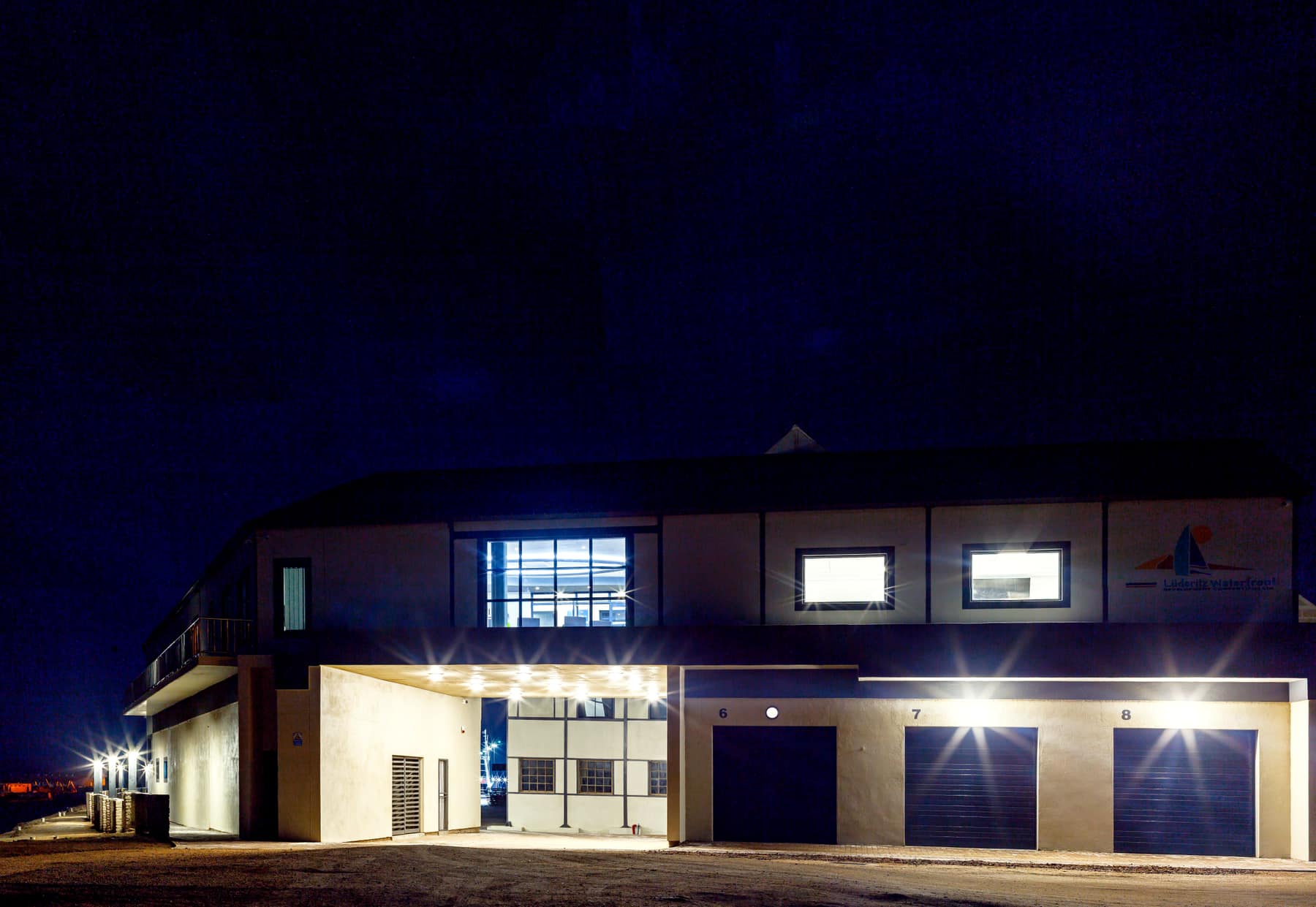
These are buildings we have done the electrical work on — the kind of places where a power failure is not a minor inconvenience.
- 96-Bed COVID Ward, built under emergency conditions
- Cancer Association of Namibia, Windhoek
- Bio Lab and the UNAM laboratory
- Standard Bank, FNB and Letshego branches
- Metro, Agra and Puma retail and service stations
- MTC head office and regional sites
Common Questions
Things people ask us.
- What is the difference between a UPS and a battery backup?A UPS switches over instantly, so sensitive equipment never even notices. A larger battery system may take a moment to pick up, but runs much longer. Many buildings want both, on different circuits.
- How long will it run for?Whatever you pay for. Runtime is the main cost driver, which is why we start by asking what genuinely has to stay on rather than backing up everything.
- Can you connect it to a generator I already have?Yes. We build the changeover arrangement so the generator picks up safely and cannot feed back into the supply, which is both a legal requirement and a serious safety one.
- How often should it be tested?At least twice a year, under real load. Batteries lose capacity quietly, and an untested backup system tends to fail exactly when it is finally needed.
More From Us
Our other services.
Electrical Wiring
Every cable, plug, light and switch in your building — planned before we start, installed neatly, and certified safe before we hand it over.
Electrical Boards
Every building has one board where the power arrives and gets shared out. We design and build ours in our own workshop, so yours fits your building exactly.
Solar Power
Namibia gets more sunshine than almost anywhere on earth. A properly designed solar system turns that into a smaller electricity bill and fewer worries when the grid struggles.
High-Voltage Work
From the bulk supply that feeds a whole property down to the plug in the wall — we are licensed for all of it, which means one contractor instead of three.
Repairs & Maintenance
Something broken, or something you would rather never broke. We do both — call-out repairs, and service contracts that catch problems while they are still small.
Let's talk about your project.
Tell us what you are building or what needs fixing, and we will come back to you with a clear plan and a fair price. Quotes are free.